I once heard James Hillman say that “interest is more important than hope.” Doctor Hillman elaborated further on this comment in an interview with Cliff Bostock.
Bostock: You don't like the word "hope" much.
Hillman: Hope is an evil. It was the one evil left in the box when Pandora snapped the lid back shut. Hope is about the unknown future. It's like the promise of salvation in the afterlife.
Bostock: So you're a pessimist?
Hillman: Not in the least. In fact, I think I'm quite the optimist. I just think we should pay attention to what is here right now. It's this hope thing that has gotten the planet into such a mess. If we paid attention to what was true right now, instead of what we hoped would be true in the future, the world would look very different. ... I'm thinking about something I said at the lectures I gave on aging last week. You experience this thing growing old of having your prostate enlarge and you have to get up in the middle of the night several times to go to the bathroom. Well, you can call this hopeless or you can say you "hope" it will get better. What I prefer to say is that in old age, I "wake up to the night." Do you see? This is a metaphorical reading of it. I think it's optimistic. It takes care of the problem and gives my experience meaning. But it's not a hopeful position. (Paradigms 1998).[i]
In this paper I will explore Hillman's notion of psychologizing or "seeing through"[ii] events, turning them into meaningful experiences, specifically by contrasting "hope" with "interest". To "see through" a troubling event moves ones experience of that event from the literal connotation toward a metaphorical or symbolic[iii] denotation.
HOPING AND HOPPING
The word hope comes from the Old English word hopian, meaning to "wish, expect or look forward to something different.” Some linguists think that the word hope is related to the word hop, creating the psychological image of "leaping in expectation" [iv] from the problem to my humanly constructed solution--a solution always limited by my past experiences of life. When I hope/hop, I think I know what would fix the problem or alleviate the emotion. So then hope is living in a state of hopping--squatted down on your haunches, anxiously looking from side to side and back to front, ready to spring this way or that, to a different destination without really wondering what there is to get from the current position. In the abovementioned interview Hillman illustrates this with his prostate condition that wakes him up several times a night, questioning the standard medical model's hope for a cure, and allowing himself to see through the experience and "wake up to the night".
This state of hoping is especially urgent when we are in uncomfortable situations. Hope focuses our attention, intentions and energies on fixing things. We obsess about changing channels, changing clothes, changing hair styles, changing habits, changing partners and changing governments--always ready to hop off in hope of something new, better and less painful.[v] In this view, a hopeful person is not engaged with the ‘pathos’ or passion of the moment – personally, politically, spiritually, emotionally, relationally or intellectually. One is merely a spectator or observer rather than a participant. The hoper becomes an anticipator rather than a participator. Participators are not only able to 'take part,' but they are aware that they are purposefully being 'taken apart' in the troubling situation. That is why Hillman said he prefers the word "interest" over "hope".
VERY INTERESTING
The word ‘interest’ is from the Latin interresse which literally means "to be between". The word comes from two words: inter - between + esse - to be.[vi] It was originally used in legal matters when an unpaid debt was owed and the ‘interested’ party had to reside in the 'between' period, wondering when the money would be paid back. The term also referred to the additional money, a.k.a. interest, that was gained 'in between' the time of loaning the money to a lender and waiting to have it paid back. Over time the word came to refer to periods of curiosity that arose from inhabiting the formless void in between what was and what would be.[vii]
A depth psychological perspective might see this 'interesting' void as a necessary experience for soul-making, for shaping ones personal destiny and for evoking the necessary character qualities that must emerge before that destiny can reach fruition. Within each of us reside many innate ideas, qualities and talents waiting to be fused with our conscious ego-self which acts in this world. So that means that these interesting experiences are always "confusing," a word that literally means "to blend together" (con=together; fusion=to blend). To be "confused" requires "interest"--a period of educational residence between places so that relevant unconscious psychic material can be synthesized with the evolving conscious self. Most of us try to avoid the painful confusion by hoping/hopping, often postponing the necessary integrative process of fusion with new psychic material--causing us to hop right into another situation just like the last one, or an even more painful situation. These hoping/hopping processes will cycle over and over until the innate psychic material is evoked and fused with consciousness, moving our destiny forward. That is why Hillman suggests that it is better to remain "in between" or become interested while stuck in the painful interim. He says a hoper asks, "Why am I in so much pain and how can I stop it," whereas the interested and confused person asks, "Who are you and what would you have me learn?" The 'Who are you' question refers to the living archetypal Presences[viii] or Fields of Unconscious Ideas Who are conversing with us in many ways (dreams, fantasies, literature, etc.) if we are psychologically literate and aware enough to dialogue with them and learn from them. Journaling, play or any form of artistic endeavor are means for dialoguing with these Presences.[ix]
Utilizing another image, "to be interested" is to consciously submit to the carving-out process, the interior excavation that creates new soul-sites through in-sight. The focus is not on some imagined or 'hoped for' future, but rather on what is occurring in the geography of the soul at the moment. That is why Hillman called himself an optimist when the interviewer called him a pessimist: "I think I'm quite the optimist. I just think we should pay attention to what is here right now" (Paradigms 1998). Hillman places a much needed corrective on what William James rightly recognized as the uniquely American religion of "healthy-mindedness"[x] or positive thinking. Positive thinking typically focuses on hope and change, fleeing the painful, uncomfortable and "negative". Perhaps we could call Hillman's perspective the "positive power of negative thinking".
Being "interested" does not mean we receive only or primarily conceptual understanding of a situation and our inner workings. The soul does not provide mere intellectual information, but rather in-formation or what some have called kardia-gnosis (heart-acquaintance). Troubling[xi] experiences destroy old psychic formations and create new core-formations. That is one reason Hillman uses the word "soul-making" or psycho-poiesis so often.
To avoid hopping and to stay present with the experience requires us to enter into and to move through anxiety, fear, grief and confusion.[xii] These emotional interstices become necessary and purposeful as the jackhammer and wrecking balls accomplished by the psychological construction crew, creating sites for new additions to the psyche.[xiii] Only through faith[xiv] in an archetypally populated Psyche[xv] can one "see through" the literal havoc to the ensuing psychic structure. Hillman calls this "psychological faith". This is not faith in some humanly devised school of psychology, but faith is Psyche herself--the living Field of images--"trust in imagination as the only uncontrovertible reality, directly presented, immediately felt" (Re-Visioning 50).[xvi] But while we are in between, the energy and focus must be on the excavation, the interesting space. Hopers spend time wondering how they can move to a different situation; interested people spend time wondering who is present, which God is there and "to go to the soul itself and find out what it wants" (Healing 86).[xvii]
HOPE AND CHANGE
There has been a lot of talk recently about ‘hope and change.’ Let’s riff on this old cliché. By cliché I am not disparaging the phrase, but rather asking that we not buy into it mindlessly. Ideologies thrive and run amok, whether on the ideological left or right, because people don’t think about the ideas presented by the ideologues. We buy into clever sounding bumper sticker slogans without examining them. Like Chicken Little we are thumped on the noggin by “something” that clearly requires our attention. But do we stop to examine what really hit us?
If the Universe has some sort of intelligence behind it, then our current painful situation(s) are always significant, or maybe better to say symbolic. Symbolein was the Greek word for a friendship necklace with two halves that that fit together to make a whole. Symbolein literally means “to throw (bolein) together (sym)”. When Hillman says one function of soul is turn events into experiences,[xviii] this is the work of the symbolic life, throwing some aspect of my daily conscious existence together with hidden unconscious meanings. Hoping often thwarts this soul-making activity by not sticking around long enough to find how the pieces fit together. Clearly there is a time to leave a painful situation, but not before consciously being interested, in order to find the missing pieces in my psyche. Of course we need to move forward, but we also need to examine where we are actually moving from before we can clearly move toward. The uncomfortable symptoms we want to hop over or hop away from contain vital experiences for the souls poem.
Quite often philosophy, metaphysics and spiritual programs advocate theories and practices for escaping soul-making: Spiritual Platonic ascension away from materiality, Gnostic return (metanoia), Hindu transcendence, Buddhist awakening, the Christian hope of the Second Coming or New Age techniques to "end suffering" may be practices of escape. The aim of such systems is often to get out of the painful worldly situation; always hoping for a healing, a miracle, redemption, the return of a messiah, wholeness, or salvation from something undesirable. Who is to say that what is annoying the hell out of me right now is not the most desirable for my soul’s evolution?
But most of us in this culture have been informed by Saint Augustine's notion of sin and salvation--awaiting the hope of Jesus' deliverance from death and dis-ease. Many modern politicians, heavily influenced by Karl Marx and Auguste Comte, have forsaken religion and have shifted this religious deliverance to a secular version of socio-political Messianism through social activism--the relatively new field of secular religion called sociology. This is true of Liberals and Conservatives; Barack Obama or Mitt Romney will save us. Nationalized Health Care will save us, or at least give us better medical care, making us forget that we are all going to grow old and die no matter how readily available medical care becomes.
But a hoper is a hopper, and those evangelists, gurus and politicians who appeal to our hoping and hopping desire always attract us. They make us believe that our current pains and problems will be solved by “hope and change,” by hopping toward their version of the promised land. They don't ask us to reside in the interesting places. They do not teach us to utilize careful and compassionate reflection on the moment of crucifixion. They give us a new deal, a new vision, a new America or an intention which is really an ex-tension out of the pain, looking and hoping for that better thing to come. These religious and secular Peddlers of Hope want us to believe that 'hope and change' are actual virtues rather than just neutral means to many different kinds of objectives--beneficial or harmful.
Furthermore, hope is nearly always accompanied by resentment and real or imagined enemies. This focus on resentment frequently shows up in political and religious hopers, no matter what the party might be, left or right. The conservatives despise the Occupy Wall Streeters, the progressives despise the Tea Partiers. Name calling, mockery, hate-speech and sarcasm reign. All "isms" thrive on hope--racisms, genderisms, sectarianisms, et.all., harboring destructive views of the "enemy" rather than being interested in their painful feelings as purveyors of new unconscious material desiring to be synthesized into personal consciousness.
However, the kind of “interest” here is more than the old Hippie and current New Age notions of ‘being in the moment.' This facile idea often implies that one find a way to milk joy out of any situation, find the beautiful sunset in the midst of grief, make a list of ten things to be thankful for, etc. --all good exercises, but not what I am talking about. Nor am I talking about being interested when things are going well. It is easy to be interested when all is going well. No one wants to hop out of a session of great sex or an enjoyable socializing time with friends. I am talking about becoming interested when the crap hits the fan and your ass is falling off.
An example of this is seen in the New Testament Christ story as Jesus is in the Garden of Gethsemane. He is about to be arrested, tried, beaten and crucified. Notice that his prayer moves from hope to interest, “Father, take this cup of suffering from me, nevertheless, not my will but Thy will be done.” Jesus, like most normal humans, prefers to hop away from the passion (pathology), but quickly surrenders to the experience itself as the will of his God. Like Jacob in the Hebrew Bible, Jesus wrestles with his God to the point of admitting feeling forsaken. And like Jacob, Jesus follows this experience through to the end--to the wounding and subsequent blessing of resurrection. Do we hope the symptom will go away, or do we enter the interim and meet the Gods in the circumstances? As Hillman puts it, “Cure the symptom and lose the God. Had Jacob not grappled with the Daemon he would indeed have not been hurt, and he would not have been Jacob either.”[xix]
What if we could acquire or learn this kind of interest when in our grief, anxiety and depressions?[xx] On July 13, 2008, my twenty-five year old son was killed in action in the Battle of Wanat, Afghanistan. I felt the earth open, the shadow of Hades race by, abducting me into the Underworld. Having a soul-making perspective, I willingly entered into the deepest, darkest experience of my life.[xxi] I followed the signage which Dante saw as entered the deepest realm of Hell, “Abandon all hope ye who enter here.” I did not abandon purpose, but I did abandon hope. I resided "in between" worlds, between the abode of the dead and the living, sometimes spending days in bed with the covers pulled over my head, sleeping, dreaming, weeping, imagining every possible scenario of how my son spent his last day and how he might of have taken the bullet to the chest that killed him. I spent time in the interim, interested, exploring and listening. This was not some academic exercise--it was full on engagement with the pain.
What if we could learn to enter fully into that 'being in between' with our fears and worries? And how about our enemies?--imagine moving into a place of genuine curiosity with them, or alone if they won’t join us. Read their literature, not to criticize or fault-find, but to understand it and them. Think their thoughts without a view of rebuttal. Attend their churches or political rallies. Relationally, what if we entered the mind and heart of our partner at his or her worst? What if we entered with interest into our own responses to painful moments; not to change anything, or lessen the pain, but to pay attention to them. Would our destinies unfold more easily and quickly if we paid attention to our insanities, intuitions and fantasies?
Pull over to the side of the road on your breakneck trip to the Land of Hope and rest in your nightmares and troubling dreams. Become curious. See the Emotions as Divine Visitors, as angels with personal messages like the dream that troubled the biblical Mary with the news, "Hey, you are pregnant with God's Idea; buckle up for nine months of morning sickness and two years of changing crappy diapers." Resist the natural impulse to hop ahead or to hope for change. Most often, when Psyche is sculpting our destiny, hope and change are just postponements of inevitable teaching moments. These moments will return again and again until the messages are attended with interest as they gestate in the womb of the unconscious.
[i] James Hillman: The founder of archetypal psychology discusses Jung and Freud by Cliff Bostock
(Originally published in the "Paradigms" column of Creative Loafing, Atlanta, Apr. 4, 1998) http://www.soulworks.net/writings/paradigms/site_026.html
[ii] This idea of psychologizing or seeing through is very similar to Heidegger's ideas of philosophizing and talking through as discussed in his book, What is Philosophy, especially pages 67. Both men engage in what Heidegger calls dialegesthai, or dialoging. Heidegger dialogues with the classical philosophers, Hillman with the psyche.
[iii] The Greek word symbolein is comprised of two words that mean "to throw together". It was used of the two pieces of a friendship necklace that made no "sense" until the two halves were placed side by side or together. A psychological symbol always contains two halves--the impersonal and the personal. Until they are connected, the event is non-sense, that is, personally unappropriated.
[iv] The Online Etymological Dictionary says, "Hope: O.E. hopian "wish, expect, look forward (to something)," of unknown origin, a general Low Ger. word (cf. O.Fris. hopia, M.L.G., M.Du. hopen; M.H.G. hoffen "to hope" was borrowed from Low Ger. Some suggest a connection with hop (v.) on the notion of "leaping in expectation." Related: Hoped; hoping. http://www.etymonline.com/index.php?search=hope&searchmode=none
[v] Elsewhere Hillman calls anger a valuable emotion that may be moving us to change an intolerable situation. There is a time for action, for change, but not until one has reflected on the event and turned it into an experience.
[vi] Interest in the Online Etymological Dictionary: http://www.etymonline.com/index.php?search=interest&searchmode=none
[vii] The Hebrew creation story begins with this image as the spirit of God hovers between the heavens and the unformed earth, in the interesting void, tohu va vohu. The six days of creation are poetically structured to form three “interesting” gaps in days 1-3: day/night, sea/sky, water/earth. From days 4-6 we see the emergence of something new arising from each interim: sun/moon/stars, fish/fowl, humans/animals. Adam and Eve are then placed in between infinity and finitude in the Garden of Eden where they encounter the interesting tree of knowing duality (good and evil). These mandorla images fill the biblical mythology as JHWH (I am) and Shatan (I am not) provide a kind of spiritual or soulful isometrics for soul-making. This was the direction in which the Christian mythos was headed under the 2nd century theologian, Irenaeus (Against Heresies) before 4th century Augustine steered the story toward original sin and redemption.
[viii] In most mythologies and religions of the world, the archetypes are referred to as Gods, Goddesses, Demons, Angels, Heroes, Heroines, etc. Each plays a role and carries an Idea or Quality that humans aspire to assimilate and emulate. Destiny or Fate are often involved in these divine encounters--furthering ones journey.
[ix] For more on this, see: James Hillman's Healing Fiction; Barbara Hannah, Encounters With the Soul; Joan Chodrow, Jung on Active Imagination.
[x] William James was a friend and associate of Horatio Dresser. Dresser's parents were vital players in the burgeoning 19th century New Thought Movement which stressed positive thinking and mental healing. James included a whole section on this phenomenon, The Varieties of Religious Experience, titled The Religion of Healthy-Mindedness.
[xi] The Christian-Gnostic Gospel of Thomas, Saying 2, has Jesus speaking, "Those who seek should not stop seeking until they find. When they find, they will be troubled. When they are troubled, they will marvel, and will reign over all." This idea of purposeful trouble informs Heidegger's views of anxiety and guilt as necessary forerunners of discovering the authentic life.
[xii] These are the obstacles named by the 2nd century "Gnostic" Bishop Valentinus in his Gospel of Truth. Something similar is done in Mary's sermon in the Gospel of Mary. Both of these texts present a soul that is made by moving through Fear, Grief, Confusion, Desire and Death. These words heavily influenced Jung's psychology.
[xiii] When Jesus said, "In my Father's house are many rooms and I go to prepare a place for you," the typical Christian reading sees a literal sort of hoped-for heaven. I suggest that Jesus was speaking of new soul-additions that would be coming after his departure. He likely had the vast Jerusalem temple complex in mind with the myriad additions supplied by the benefactor, King Herod. In addition, the Greek word for rooms was sometimes translated classrooms. Jesus was likely referring to coming soul lessons, not some residence with harps and halos.
[xiii]i Hillman points out that the 2nd century Christian Theologian, Tertullian, understood this, beckoning other believers to listen to a new witness, "Stand forth, O soul...,stand forth and give thy witness." (Healing Fiction, p. 86). I remember reading that Tertullian also warned his fellow Christians that they formation of a canon of sacred literature ran the risk of "chasing the Holy Spirit into a book."
[xiii] Re-Visioning Psychology, p. Heidegger speaks of the “the call of conscience,” and the necessity of guilt and anxiety which wake us up to an authentic life. Being-in-the-world rather than splitting the subject from the object, which is what hope often accomplishes, is what moves one toward the potentiality-of-being.
[xiii] Jesus seemed to understand this when he shockingly glorified pathology in the Beatitudes, blessing depression (“poor in spirit”), grief (“those who mourn”), being offended (“those who are persecutes”), humiliation (“meekness”), etc. He even suggested that people “pray for their enemies,” recognizing even the painful situations as normal and necessary in a purposeful universe.
[xiii] I later sent an email to James Hillman thanking him for his Ideas which changed not only what I saw, but the means by which I saw. He responded (quote)
[xiii] http://www.terrapsych.com/hillman.html


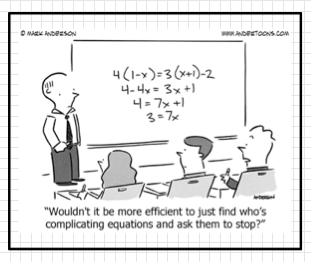 problems, not as inherited family illnesses, but as congenital "questions posed by Fate" to his ancestors. In this view, my ancestral connection has passed along the assignment to for me to take up. Here Jung uses a developmental metaphor in order to emphasize the soul's ongoing process of continuation and completion rather than that of inflexible sickness and brokenness. In a developmental metaphor, trauma is more like an algebra assignment. I am not broken and don't need to heal anything, but am allowed to continue working on and completing the Fateful family assignments.
 the only alternatives are to get well or remain sick. If I don't "get well," then I have failed and remain sick and broken. But the educational and agricultural developmental metaphors allow for progress through the ancestral journey. I am merely one student in a family endeavor. I am not defective, but merely incomplete until the assignment is finished--likely many generations from now.