Showing posts with label Carl Jung. Show all posts

Monday, August 7, 2017

Do I Really Always Need Healing?


Do I Really Always Need Healing?


"Healing" seems to be the primary or even solitary spiritual metaphor these days. Sermons, book titles, seminars, YouTube talks, etc. are fixated on spiritual and psychological healing:

  • How to Heal Your Soul
  • Ten Steps to a Healthy Relationship
  • How to Cure Depression
  • Spiritual Healing
  • How to Heal P.T.S.D.

The implication is that I am sick, broken and fundamentally defective.
First off, let me acknowledge that healing is a legitimate metaphor when referring to psycho-spiritual traumas, but it is not the only symbol for approaching emotional distress--nor perhaps even the best. When the healing metaphor fails, I am stuck without alternative ways of seeing my trauma. There is another metaphor found in Carl Jung's autobiography:

"It has always seemed to me that I had to answer questions which  Fate had posed to my forefathers and which had not yet been answered, or as if I had to  complete, or perhaps  continue, things which previous ages had left  unfinished." (Jung,  Memories, Dreams and Reflections)
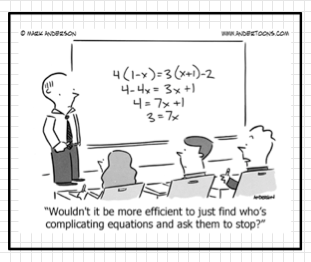
Here Jung sees his psycho-spiritual problems, not as inherited family illnesses, but as congenital "questions posed by Fate" to his ancestors. In this view, my ancestral connection has passed along the assignment to for me to take up. Here Jung uses a developmental metaphor in order to emphasize the soul's ongoing process of continuation and completion rather than that of inflexible sickness and brokenness. In a developmental metaphor, trauma is more like an algebra assignment. I am not broken and don't need to heal anything, but am allowed to continue working on and completing the Fateful family assignments.
Jesus and the Apostle Paul frequently use developmental agricultural images to symbolize the spiritual life:

  • Jesus: "The kingdom of God is like a seed that grows over time." (Mark 4:26-29)
  • Paul: "I have planted, Apollos watered; but God gave the increase." (I Cor. 3:6)

Many early Christian theologians viewed Adam and Eve--planted like human seeds in the Garden of Eden--as a parable for human development. The so-called "fall" denotes the moment the embryonic human is cast into the soil of life in order that each of us might move from the raw image of God into the completed likeness of God. In this view, I don't need healing, but rather maturation through ongoing life experiences--negative and positive.
But when healing is my sole symol for spiritual and psychological traumas, I assume
the only alternatives are to get well or remain sick. If I don't "get well," then I have failed and remain sick and broken. But the educational and agricultural developmental metaphors allow for progress through the ancestral journey. I am merely one student in a family endeavor. I am not defective, but merely incomplete until the assignment is finished--likely many generations from now.
          
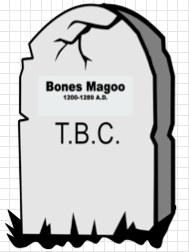
When it comes to psycho-spiritual traumas, let's utilize our metaphorical imaginations. Life is more than a disease to be healed, much more than the mere cessation of all suffering. It is a vital journey through many stages and modes of being and living. Perhaps instead of R.I.P. ( Rest in Peace ) on our gravestones, we ought to etch the letters T.B.C. ( To Be Continued ).

Michael 

Why We Need the Fundamentalists


Why We Need Fundamentalists


"It is a psychological rule that the brighter the light, the darker the shadow..." 
C. G. Jung

These days we hear a lot about Christian, Islamic, Jewish, Hindu, and Buddhist fundamentalisms. What these groups most often have in common is a radical and forceful return to the religious "fundaments" or foundational beliefs and practices of their various cultural traditions. One derisive comedian said a fundamentalist might be defined as "a person who hates fun, damns everyone else, and has lost his mentalreasoning abilities!" Many of us sympathize with this critique and have nothing but disdain for anything related to fundamentalism. 

However, from a soul-making perspective, every "fundamentalism" is an archetypal rejoinder to a potentially dangerous personal and/or cultural pattern of consciousness. You see, fundamentalisms have not only dangerous aspects, but healthy aspects as well. They are always compensatory, archetypal responses to personal and cultural imbalances. Not understanding this psychological axiom keeps us from seeing the important insights embedded within a particular
fundamentalism. Fundamentalists act as modern sibyls proclaiming the loss of mystery while rigorously championing cosmic and psychological enchantment. In his bestselling book, The Soul's Code, James Hillman has praise for fundamentalism:

"Fundamentalism attempts, literally and dogmatically, to recover the invisible foundations of culture. Its strength lies in what is seeks; its menace is in how it proceeds..." 

With his usual mercurial dexterity Hillman captures the light and shadow of fundamentalism in a single sentence. In 1948 theologian Nels Ferre--while recognizing the dangers of radical religionists--said every religious fundamentalism is also a:

"...defender of supernaturalism, has...a genuine heritage and profound truth to preserve.... We shall some day thank our fundamentalist friends for having held the main fortress while countless leaders went over to the foe of limited scientism and a shallow naturalism."

Hillman and Ferre both recognize a fundamentalist as a person who is not afraid to stick their finger in the eye of the messianic political sophists, the pretentious secular media and the reductionist academies. These annoying radicals rightly criticize modern culture for leaving no room for mystery. And of course the methods of the often pretentious and even murderous fundamentalists may be menacing, but their deeper archetypal mission is to restore the invisibles to their rightful places in a frenetic world reduced to statistical facts and socio-political ambiguities. One may disagree with their theologies, revelations and menacing methodologies while remaining prescient enough to let them remind us to take the imaginal realm seriously in a world reduced to anthropic scientism and materialist absurdities. They may literalize and dogmatize their myths, but at least they fight for the essential reality of mythic truth while many of us remain silent, or try to impress others by bloviating about esoteric metaphysics, or waxing scholarly about arcane mythic trivialities. Archetypal reality is fundamental to every thought, feeling, dream and action. If we lose these fundaments, our personal, relational and cultural lives will perish. In the words of Hillman: "The great task of a life-sustaining culture...is to keep the invisibles attached..."

Wednesday, March 4, 2015

Carl Jung and James Hillman: The Tree of Life and the Tree of Knowing Good and Evil

I found this great quote from Tom Cheetham (in his works on Henry Corbin). I think only true Hillmaniacs can understand it, especially when we are trying to reconcile the drive toward integrative wholeness while recognizing the necessity of falling apart:
To compare Hillman and Jung in any detail is far beyond the scope of these remarks...Hillman is "a Jungian" by any standard, but rather a wayward one. Any simple contrast will be inadequate and perhaps misleading; but if Jung is the Wise Old man, Hillman is the Trickster, or pretends to be. Years ago when I was immersed in reading them both rather obsessively in the midst of the beginnings of my own psychic crisis, the difference was quite a practical one about which I thought very little. If I were feeling threatened by fragmentation, I would read Jung. If I were in terror of being bound and stifled, I would read Hillman. I still think  that says a lot about their differences. (All the World an Icon: Henry Corbin and the Angelic Function of Beings, pp. 190-91)

This contrast may help to explain and understand the juxtaposition of the Jewish tree of life right next to the deadly tree of pathologizing (knowing good and evil) found at the center of Eden. The Hebrew authors typically honor the phenomena of their observed experience, even when the phenomena screws with their received tradition. They acknowledge that humans want long life, and yet recognize that the same humans yearn to defy life by breaking the rules and challenging all boundaries. 


When the Genesis author writes that "Adam [humankind] became a living soul," he is recognizing the innate human propensity for life and survival, subsequently stating that God provides a tree of life to feed that original desire to live. But then God creates the puzzling tree of knowing evil as well as life-giving good, presided over by the divinely fashioned wise snake to give that tree of death (desire) a voice. Why? I think this image is added in order to acknowledge that there is also deep within the human psyche a yearning for something more than merely staying alive and following the rules; there is also a drive to challenge death. Humans not only desire to live and follow orders; but from crawling infancy we desire to rise up and walk, talk and act in forbidden ways. Humans have always been compelled to defy that most feared enemy of human existence, mortality. Paul calls death the "final enemy" (I Cor. 15:26). In the Eden story, by placing that final enemy in the form of a deadly tree of good and evil at the center of the garden alongside the tree of life, we see the ultimate challenge of humanity. God's good created order is made to be challenged. The purpose of life is to charge straight into the certainty of death, the real final frontier. Overcoming death is the final obstacle, the last enemy of complete dominion. The Hebrews knew this to be the final goal. In Isaiah the prophet we read of the final removal of the veil of death that encloses all humans:
And on this mountain He will swallow up the covering which is over all peoples, Even the veil which is stretched over all nations. He will swallow up death for all time, And the Lord GOD will wipe tears away from all faces, (25:7-8) Your sun will never set again, and your moon will wane no more; the LORD will be your everlasting light, and your days of sorrow will end. (60:20)
Paul quotes this passage in the light of Christ's resurrection: "When the perishable has been clothed with the imperishable, and the mortal with immortality, then the saying that is written will come true: 'Death has been swallowed up in victory'" (I Cor. 15:54). This is reiterated in the Christian book of the Apocalypse: "Then I saw “a new heaven and a new earth,” for the first heaven and the first earth had passed away…There will be no more death’ or mourning or crying or pain, for the old order of things has passed away” (Rev. 21:1-5)

The final obstacle, represented by the tree of knowing good and evil--the tree of death--has been overcome. The seed of the woman (humankind) has crushed head of the snake and his death-test. I am not setting forth a theological or metaphysical system here, though I think one can. I am merely suggesting that the Eden story posits what the human psyche intuits: humans desire both to live in order (tree of life), and we are brazenly compelled to transgress every boundary (tree of knowing good and evil) in our autonomously compelled pursuit of complete dominion, healing, wholeness, integration or individuation. 

Psychologically this plays out in everyday life. Humans are chronically discontent, simultaneously seeking order and disorder, pleasure and pathology. The single person wants desperately to be in a relationship; the married person fantasizes about freedom. The demure house wife or house husband ponders or pursues a covert tryst with a stranger. The born again Christian cheats on his taxes. The militant atheist secretly reads books about life after death. Our Jekyl-Hyde character is what makes us so fascinating. This enigmatic combination of loving peace and wholeness along with our innate compulsions to addictions, neuroses and fifty shades of gray is what makes us so damn human. After all, according to Isaiah, this is the schizophrenic or bi-polar image of God in which humans are designed: God says, "I am the Lord, and there is no other. I form the light and create darkness, I bring prosperity and create disaster; I, the Lord, do all these things" (Is. 45:6-7)

Finally, this ambiguity was not discovered by Freud. The Viennese doctor merely reinvented the Edenic wheel by restating this psychological ambivalence in his theory of the eros (life) and death drives--like it was some novel idea. This moral duplicity is also found in the Hebrew God who sent a flood to obliterate the earth that he so delicately created; and again by destroying the beautifully constructed Tower of Babel built by the very humans he created to have dominion over the earth. 

The biblical human is a delightful contradiction, intentionally. The two sides are represented in Carl Jung and James Hillman; Jungian and post-Jungian, wholeness and fragmentation.


Tuesday, October 1, 2013

Why Addicts Often Make Good Depth Psychologists

A close friend of mine who is in recovery recently got me to thinking about my distant past experiences as a completely lost alcoholic/addict. This friend wrote me a very honest email expressing skepticism his about "God,"about  Depth Psychology and about life in general when the crap hits the fan. The friend expressed feelings of misery and despair over his current circumstances. Some of us would have given this person a pep talk--I did not. Here is my response:
-------------------------------------------------------------

Dear "Friend" (who shall remain anonymous:
 
When I was at the end of my drinking, Alcohol had become my friend, my lover, confidante, distraction, holy spirit, doorway into alternative realities, poetic inspiration, romance booster, gateway to self esteem, and courage to fight; my escape from pain and my entrance into pleasure; my reason for waking up and my aid in going to sleep. It became my reason for and means of living. I remember those days toward the end of my drinking when I would pick up the phone to call a treatment center for help, but when someone would answer, a force stronger than my desire to stop made me slam the phone down in sheer panic. I could not give up my sole purpose for existence. I literally referred to Alcohol as "my Lord and Savior". No wonder Jung said: "spiritus contra spiritum". If the Mount Lake Terrace police had not placed me in the back of their squad car one October afternoon, I would have likely died. The cop actually said, "We're not really arresting you, we're rescuing you." I was a sorry sight. 


You admitted in your email that you are sober and miserable, that life is not working as you'd like it to. I understand--I have had those experiences and will undoubtedly have many more. Sometimes we go through experiences, loooooooonnnng experiences of just plain Hell. I also have the very same thoughts and feelings you described, especially at times when the shit hits the fan. I also am seized, occasionally, by the the though that "a drink" would really take the edge off. I get it.


Let me say initially that your honesty is refreshing in an age where people chant like Zombies: "It's all good." Such an attitude of thoughtless positivity, while commendable at some level, trivilizes what is actually Good! If it's "all good," then when things are actually good, there is no word for it. And, let's face it, it's not "all" good--sometimes things are just bad. Admit it. And you have.


Honesty--that is the key--and I appreciate your honesty. You think Carl Jung is a quack and that "accessing the depths of the invisible unconscious" for insights is B.S. Good for you for saying what you are actually thinking at this moment. Even as a student of Depth Psychology, I have that thought at least once a week--usually when things are going the way I want them to.
 
But generally speaking, Depth Psychology is the closest thing I have found for making some sense of this non-sense called life. For example, I woke up this morning from a very vivid dream, then tried for a minute to find "insights" and finally thought, "Fuck it. Dreams are nothing more than neurological flatulence," and I forgot it. That was my honest emotional experience, but I didn't conclude that that single thought ought to be my new dogmatic mantra for all of eternity. Tomorrow I may gain deep insights from a dream. When we are in the throes of our own consciousness no two moments are ever exactly the same. The human psyche is the equivalent of atmospheric weather patterns--chronically changing every moment. In fact, the word "atmosphere" is derived from the Sanskrit word "atman/wind/breath" or the "sphere of divine atman," so comparing psyche and weather isn't so far off. Both the cosmos and soul are in a state of blustering flux. Mitchell's translation of the Tao Te Ching, poem 23, says: "Express yourself completely, then keep quiet. Be like the forces of nature: when it blows, there is only wind; when it rains, there is only rain; when the clouds pass, the sun shines through." Our emotions are always in the seizure of some divine influx that is interacting with our soul-making process. Sometimes we need to fight it, other times we need to submit and listen. Discernment is crucial.
 
More and more I think anything, including depth psychology, can be taken far too seriously. I think the heart of depth psychology is simply to be more or less conscious than the average duck--which means to actually have some sense of what is occurring in the psyche: am I pissed?, am I happy?, am I in a "don't give a damn" mood (mode of consciousness)?, am I suddenly seeing "God" working in my life?, etc. Depth Psych., like anything for the addict (or humans in general I suppose) can all too easily turn into a control issue, like using alcohol, religion, sex, or anything--we begin to ritualize and structure life by the "system", setting up a "way" it works and the "way" it ought to bring results and reasons it won't work and how it is alternatively fascinating or bullshit. The wonderful and nefarious human ego can take anything good thing and hijack it, fit it into a straight jacket. The real significance of Depth Psychology is that is defies human systematizing or ultimate explanations. The moment we hook a live fish from the sea of psychological depths, pull it into the rarefied air of consciousness, gut it and cook it up as a "profound" insight, it is not the same living entity. 

Depth Psychology is being practiced when one is just simply aware of hating or loving something--at the moment of encounter, especially when those encounters are prolonged and raw. Some would equate such experiences as divine, and while I am not disagreeing, I think radical atheists can be more in touch with the "divine" than most theists. True atheists are obsessed mentally and emotionally with the divine. I have a feeling that if there is a "Day of Reckoning" that many atheists will find themselves closer to the divine than many perfunctory believers. Knowing the depths is not restricted to the religious folks. In fact Jung once suggested that religion is often the most effective defense against actual psychological experiences.

I also think that the addict is something of an automatic Depth Psychologist, if one sees Depth Psych. for what the phrase really connotes, "being aware of the deeper stuff in the human mind and heart". Most "normal" content humans simply water ski across the surface of life and their own internal consciousness, while most addicts like to put on the aqua lung and plunge into the unseen depths of reality. Most stable humans prefer the calm surface because they are lazy when it comes to seeing the various sides of existence--not bad, not evil--just lazy. This is not a disparaging judgment--when I was drinking I frequently envied those people I saw who could believe and do the same things year after year without questioning.  

The addict, however, loves the depths. For the addict, drugs and alcohol can help him/her go up or down, become shallow or go deep, depending on what he/she wants at the moment--but one thing addicts seem to despise, and that is normal. That is why sobriety can be such a challenge for many in recovery. When the sober addict finds him/herself living a stable, productive yet sometimes boring life, he/she longs for that old drug to get him/her back into the interesting depths. The trick, when choosing to remain sober, is to learn to see the rewards for being shallow and boring, and then to discover different ways to go deep and experience those alternative states of creative and bizarre consciousness we addicts so adore. Alcohol and drugs are just means or methods for going deep, and there are literally countless other ways to achieve the same effects. 

Bottom line: your honest emails disdaining attempts to "become conscious" are ironically conscious--often more conscious than others I know who are "trying" to become conscious. Depth Psychology is not some formulaic technique for consciousness or some method to achieve some perceived and intended "psychological" outcome. Reflective and engaging honesty is what counts. Not mere brute "honesty," but reflective and engaged honesty--probing both sides of a thing without censorship. The most profound statement I have ever gained from James Hillman is this: "Soul knows neither morality nor mortality." That is a loaded and potentially dangerous comment. I take it to mean that morality and mortality count in this life when living within human society and with other people--but in one's personal soul work, there are no rules except honest, reflective engagement with the feelings and attitudes scampering about inside of us--hand to hand combat with the inner demons and angels. Feel your contempt and hate consciously, but then question it. Doubt without mercy or regret, but question your doubts. When you think you have gotten behind an issue or feeling, go deeper, then deeper yet. No conclusion is ever final. Depth Psychology regresses until there is no conceivable place to move to...yet. Be miserable, and explore the experience of Misery. Get a dictionary and study the word, ask her/him out on a second and third date. Remember that Alcohol initially took you deeper and deeper, and then like Jonah's whale, spit you out on a foreign beach--abandoning you. The journey into the depths is not over--just different--if you allow the experiences you are currently undergoing to be the new whale.

That's it from me. Have a long miserable weekend! It will blow over.


Wednesday, July 20, 2011

THE GOSPEL ACCORDING TO THE BEATLES

The Beatles and The Four Stages of Psycho-spiritual Consciousness


“The more I go into this spiritual thing, the more I realize that...something else is doing it.” ~ George Harrison

Nearly 2,000 years ago, four Gospels named for Matthew, Mark, Luke and John changed the course of human consciousness and history. Fast forward almost 2,000 years to twentieth century Europe and America--a time of dehumanizing technology, world wars, political tyranny, religious decline and civil unrest. This soul-malaise moved Carl Jung in 1933 to write about Modern Man in Search of a Soul. Less than thirty years after Jung's assessment, four young English musicians named John, Paul, George and Ringo took the world on a psycho-spiritual magical mythical tour of soul evolution. With their lives and music the Beatles would penetrate a rigid Western consciousness, expanding it like a Rubber Soul.

In their early years, the four teens were influenced by what had been dubbed the Beat Generation, a term coined by a group of American writers, artists and rebels like Jack Kerouac, Allen Ginsberg and William S. Burroughs who came to prominence in the late 1950s and early 1960s. The term beat connoted being "beat down by the establishment," but Kerouac added the paradoxically optimistic notion of restoring a new "upbeat and beatific” vision of consciousness. The four English musicians liked the symbolism and called themselves The Beatles. John Lennon felt "beat down" by life, and with his assertive rhythm guitar caused the band to explore all human emotions. Lennon said, "My role in society...is to try and express what we all feel...Not as a preacher, not as a leader, but as a reflection of us all" (Beatles Biography 83). James Paul McCartney, undeniably the most musically balanced of the four, added stability and an almost naive "upbeat" optimism. Paul Vallely said of McCartney, "Paul McCartney is one of those people who has represented the hopes and aspirations of those born in the baby-boom era, which had its awakening in the Sixties" (The Independent). Add the slaphappy no-rolls drumming of Richard Starkey whom Lennon called "quite simply the heart of the Beatles," and the shy spiritually minded George Harrison with his rockabilly guitar style, and you have what drug guru and Harvard psychologist Timothy Leary, in his book The Politics of Ecstasy, called, “The message from Liverpool...the Newest Testament, chanted by Four Evangelists-saints John, Paul, George, and Ringo" (134).


It is my contention that this Beatle "message" corresponds very nicely to what some have identified as archetypal stages of evolving consciousness. Stages-of-growth theory is founded on the Freudian depth psychological work of Eric Erickson and developed at the spiritual and moral levels by James Fowler, Lawrence Kholberg, M. Scott Peck and many others. Jung refers to four universal stages of individuation in his work, Man and His Symbols, citing Paul Radin's study of the heroic cycle in the Winnebago Indians mythology(112-114). These four stages are also found in the Eros and Psyche myth, the Hindu stages of life, the phases of the Buddha's awakening, the Epic of Gilgamesh and in the evolving God-image of the Bible. I will utilize the four stages as developed by Scott Peck in his book, The Different Drum, (186-200). After a brief description of each stage, I will give parallels found in the Beatle's biographical and musical career which animated, evoked and altered the consciousness of Western civilization.


Stage one is the ego stage, or what Scott Peck calls the Chaotic-Antisocial phase, "…a stage of undeveloped spirituality [during which a person is] incapable of loving others...[and] relationships with fellow human beings are essentially manipulative and self serving…, [eventuating] often…in social difficulty" (Different 188-89). This describes the early years (1959-62) of the ragtag band that would become The Beatles. They described themselves as Teddy Boys, the equivalent of American Beatniks, with skin tight jeans, leather jackets and ducktail haircuts. They smoked, drank, did drugs and fornicated. Their early music was little more than dissonant shouting and bizarre theatrics. McCartney was arrested and deported from Hamburg, Germany for setting fire to their apartment located in a porn theater. Their first big hit song written by John, Please Please Me, was covertly sexual, admonishing the prudish English lassies to please their lads like the carnally enlightened German Fräuleins.


Eventually such pathological behavior breaks a person down, preparing them for stage two--Formal-Institutional--which provides necessary structure so that social skills might be acquired. The ego expands to embrace some "other" person, idea or tradition. Falling in love, getting a job or finding an ideological stance is common. In 1962 the Beatles, demoralized by their chaotic German gigs, met their manager Brian Epstein who encouraged the group to assume a more mature social attitude. John Lennon recalled Epstein's words, "Look, if you really want to [succeed]...you're going to have to change—stop eating on stage, stop swearing, stop smoking" (Anthology 67). During this period they donned suits, wrote formal love songs and focused on the institution of romance with lyrics like, "I Wanna Hold Your Hand," and "She Loves You Yeah Yeah Yeah." They guided a generation of young men and women, providing both with permission to fall insanely in love and attach to the idealized "other".


This second stage also comes to an end, always painfully, as the evolving consciousness tires of symbiotic enmeshment with the "other". Stage three arrives--the Skeptic-Individual phase--wherein one becomes an "active truth seeker" (Different 192). Confused and questioning everything, a person begins to discover who lives at the core of the self. This stage of consciousness overtook the Beatles shortly after achieving success in 1964. Neither stage one hedonism nor stage two institutional stardom had worked, so they shed their conformist suits and began using drugs to expand their individual awareness. Their albums changed tone, calling out for HELP! after experiencing too many Hard Day's Nights. They longed to escape from the socially restircting box they were in. Suddenly their songs were about failed love, domestic abuse and evil taxmen. They felt torn to pieces and expressed it by releasing "The Beatles Yesterday and Today" album with the Butcher Cover displaying dismembered babies. After an initial release, the record jacket was immediately recalled and replaced. The second image was less macabre yet still showed them emerging from the conformist box as individuals bent on differentiating "yesterday" from "today". In his book, The Beatles and Philosophy, Erin Kealey writes: "Beginning in 1965, the Beatles take a philosophical turn from singing the romantic songs that brought them early popular success to scripting more profound and critically acclaimed lyrics that probe the human condition…[exploring] such issues as getting lost in the crowd, alienation, self-deception, and the call to a better way of life." (109)


Scott Peck notes that stage three typically ends in hopeless exhaustion accompanied by spiritual curiosity, leading to the dawn of stage four--Mystic-Communal. Shattered by the in depth analysis of stage three, stage four results in an emptying out of the self and an increasing awareness of an "invisible underlying fabric that connects everything" (Different 193). During this period the Beatles went on meditation retreats and produced Sgt. Pepper's in 1966 with an album cover sporting such psycho-spiritual luminaries as Sigmund Freud, Carl Jung, Babaji, Yogananda and an image of the Hindu Goddess Lakshmi. The album also included Harrison's Krishna inspired song, Within You Without You. The stark White Album was released in 1967, a symbol of emptying out the past and the future. The Beatles were helping a whole generation move through stages of development, regaining the lost soul Jung had written about in 1933.


Their first and last album covers taken alone demonstrate how the Beatles symbolized and galvanized the evolution of Western consciousness through the 1960s. Their initial album showed the four in complete conformity with no distinctions between them. Their last two albums revealed four unique characters walking away from the "institutional" Abbey Road studio, and then a final Let It Be cover that was similar to their first album with all four guys together, except that now each Beatle had acquired his own distinct look and individuated quadrant. The final message was clear: Be yourself, things change, move on and let it be.


The Beatles knew there was something mythical occurring during those years together. George Harrison said in 1967, “The more I go into this spiritual thing, the more I realize that...something else is doing it” (Gospel 194). Paul McCartney agreed, “We just happened to become leaders of whatever cosmic thing was going on. We came to symbolize the start of a whole new way of thinking” (Gospel 194). After they broke up John Lennon said, "The Beatles were a kind of religion" (Gospel 11).


Jung, in Man and His Symbols, says that the four stages of evolving consciousness found in every culture "provides a clear demonstration of the pattern [of individuation] that occurs both in historic myths and in...modern man" (114). The Beatles provided that archetypal pattern for many in the twentieth century. They became the living symbols of individuation, motivating scores of people to march forward in the messy yet magical, mythical soul-making processional.
Friday, November 5, 2010

Mystical Narcissism: The Law of Attraction Meets the Law of Opposites


MANIPULATING REALITY

In the Middle Ages, the Roman Church sold Indulgences or spiritual insurance policies created by the clergy for a profit. People were absolved of Purgatorial punishments by paying money to the Church. The more they gave, the more time off from bad behavior they received. They could even pay to release their deceased relatives writhing in the woes of Purgatory. The bottom line was that one could manipulate God.

The movie, The Secret, reminds me a little of those old Catholic Indulgences. Both teachings ignore or play down co-creative soul-making by placing humans solely or primarily in control. They ignore or forget the realm of Archetypal Intelligences that work on, in and through humans to guide their destinies, create Character and make Soul. Both forget that there is an unseen drama at work beyond human understanding. Both views cross over into spiritual narcissism, a state of mind that really believes the individual creates ALL reality and is at the center. This is normal and fun for small children, but emotional suicide for adults. Mysticism is 'being one' with all, but mystical narcissism is 'being the only one'.

THE THREE LEVELS OF LIFE

Like three dimensional chess, the game of life is played on at least three levels:

1. Solo-making: Working on myself; realizing my potential; all self help and most individual psycho-therapy programs.

2. Social-making: Working on my relationships; realizing union with others; community building, relationships and group therapies.

3. Soul-making: Being worked on by Invisible Guides; character is being built in every circumstance of life and death.

At the first two levels we are the creators, exercising freedom. At level three we are the created objects of a Soul-making Universe. The Secret beautifully addresses level one, Solo-making, and touches on level two, Social-making. But The Secret virtually neglects level three, Soul-making.

THE OTHER SECRET

There is an Invisible Universe called Soul which co-creates, sometimes applying 'Laws' that seem to contradict the Law of Attraction. I understand that the aim of The Secret is to focus on realizing personal potential and success, but to ignore Soul-making can have severe consequences for the person thinking that life occurs only in the first two dimensions - especially those who can't quite seem to apply The Secret and turn their lives around like all of the glowing anecdotal stories in the film.

In my opinion the real forgotten or lost Secret in this culture is that of the Soul-making dimension. At that level, there are many Archetypal Intelligences (plural) that arise from The One Mind. These Presences are making Soul in addition to, or sometimes in spite of, our positive or negative thoughts and intentions. We cannot ultimately manipulate these Energies to give us what we want by thinking or feeling.

SOUL MAKING AND THE LAW OF BALANCE

The Law of Attraction (
I call it the Probability of Attraction) can work to change our external circumstances, to a degree – but it is not the only Law in the Universe. The Universe primarily conspires to make souls, not wealthy and healthy egos. We must not forget the Law of Balance, or Law of Opposites.

To make souls requires both the positive and the negative poles, which means that soul requires going into the dark depths and divine chaos as much as it requires rising into the light and divine order. We see this equilibrating principle at work in the world of physics with electricity and magnetism. There is no power (empowerment) without negative and positive currents; you do not have light (enlightenment) without negative and positive poles. You do not have Soul-making with only the Law of Attraction.

Another example is the Law of Gravity. As an only law, gravity would leave birds and humans grounded. Fortunately, for birds and those of us who benefit from air travel, there are the corresponding Laws of Aerodynamics to expand reality beyond a one dimensional grounded experience. These other laws ultimately do not contradict the law of gravity, but work in conjunction with it.

Similarly in psychology and metaphysics there is a Law of Balance which works with the Law of Attraction. The Law of Balance teaches that the Universe always seeks equilibrium.
Over 2,000 years ago, Plato wrote in the Phaedo, "Everything arises in this way, opposites from their opposites" (section 71a). Prior to Plato, the Greek philosopher Heraclitus said that "cold things warm, warm things cool, wet things dry and parched things get wet" (Fragment 126). He used the analogy of the strings stretched on a bow and lyre when he wrote that many people "do not know that the differing or opposed thing agrees with itself; harmony is comprised of reflexive tension, like the bow and the lyre" (Fragment 51)).

The ancient Chinese Tao Te Ching, Poem 77, states the same idea:

As it acts in the world, the Tao
is like the bending of a bow.
The top is bent downward;
the bottom is bent up.
It adjusts excess and deficiency
so that there is perfect balance.
It takes from what is too much
and give to what isn't enough.

Those who try to control,
who use force to protect their power,
go against the direction of the Tao.
They take from those who don't have enough
and gives to those who have far too much.


In the modern world, Swiss psychiatrist Carl Jung called this phenomenon 'enantiodromia,"
the notion that the superabundance of any force inevitably produces its opposite. For Jung, this referred to the tendency of the unconscious mind to introduce material into the psyche which would balance out the conscious mind. These opposites or balancing events often show up externally as well in people and circumstances in ones daily life. The man who is hyper-sensitive continues to meet domineering women, the child who is timid is fascinated by outspoken people, the demure religious woman who loves to read stories about serial killers, etc.

The universal recognition that Nature is in a state of constant homeostasis, balancing one extreme with its opposite, is a critical "Law" to recognize for mental well being. When things go "wrong," these opposites provide the necessary and normal conditions for making a soul or developing a full character.

PSYCHOLOGICAL PREJUDICE

It is also important here to remind the reader that we must be careful to avoid the usual attitude taken by some when they say, "Oh yes, we have to go down in order to grow up, we must have the bad to see the good." This subtle distinction prejudices the scales--making it sound as though growing up is the real aim of all negative experiences.
The danger in this attitude is that we are always waiting for the negative experience to end so we can get to the "real" experience of the beneficial outcome. As much as I do not like to say this, the fact is that sometimes people spend many years or a whole lifetime in circumstances that are less than beneficial. The 10 million people who died in Nazi Concentration Camps did not get to see the "benefits" of their nightmarish ordeal. The millions of young men who died in war did not get to see the "good" in their sacrifice. The soul does not distinguish "good and evil," as our metaphysical and psychological systems so often do. It is true that we often do get to see the "good" or beneficial result, but not always. Even so, all experiences are purposeful.

These opposites are not on a horizontal, hierarchical scale of good and evil, but rather on a vertical scale of negative and positive--looking much like a teeter-totter going up and down rather than a thermometer escaping the cold basement. On this teeter-totter, the unifying principle is purposefulness rather than good feelings or happily-ever-after outcomes. It is great to hope, pray, hold mental equivalents and intend the Good outcome, but that is no guarantee that the circumstances will automatically and always change. This realization, at first, will be very depressing for some who live in a child-like fantasy world. But as time goes on and all of the "laws" of existence are realized, there is a kind of peace that transcends good and evil, dark and light. We do not have to enjoy the negative experiences, but we can have faith they are purposeful and containers of profound meaning if we embrace them and open our eyes and ears.

HERESY!

Those of us who appreciate The Secret need to be cautious. We are perilously close to heresy. I am not talking about the heresy of believing in the wrong religious dogma, but the original meaning of the word heresy. Heresy means 'to choose'. Real heresy is choosing one side of a Truth-paradox to the exclusion of the other side – it is choosing up over down, the masculine over the feminine, or particle over wave in the realm of physics. Heresy forgets paradox and denies wholeness. Some see wholeness as perpetual health, happiness, order and success. Soul-making wholeness is embracing the opposites, all aspects of the complicated and fascinating multi-verse we call a Universe, the good, the bad and the ugly.

A GRANDER PLAN

We Westerners sometimes take too much credit for our successes and abundance. That is not to say we have nothing to do with our prosperity, we often do. I enthusiastically teach classes on the amazing Law of Attraction; I use the principles daily. Clearly our mental attitudes affect internal and external circumstances. An optimist is more likely to be happy than a pessimist. We hugely increase our chances of health and wealth by thinking positively.

However, there are poor optimists and wealthy pessimists; there are sick optimists and healthy pessimists. The simplistic one to one correlation of positive thinking to wealth and health cannot be demonstrated. I know lots of 'positive thinkers' and most of them have life experiences that are pretty much the same as 'negative thinkers' – both groups are comprised of folks who are concerned about money, holding their marriages together, raising troubled children and staying healthy. The one difference is that the positive thinkers find meaning and soul in their daily challenges, even if they can't manipulate these problems away with happy thoughts.

Soul-making recognizes that there is a grander plan in the Universe than attracting perpetual success and happiness through some thought manipulation. This formulaic approach can easily degenerate into a kind of New Age legalism, a sort of optimist's version of the Ten Commandments.

HUBRIS

Occasionally we see some of the most optimistic celebrities and greatest advocates of Positive Thinking leveled by horrific disasters. Health and wealth teachers get caught in financial scandals, optimistic celebrities end up in rehab, politicians and televangelists have sexual affairs. This is the Law of Balance at work - the Universe is not being controlled by humans alone. These disasters make Soul as well or maybe even better than all of the successes.

The old Greek gods would not tolerate human hubris – translated arrogance. The brilliant classical scholar Elizabeth Vandiver of the University of Maryland tells us that the oft quoted phrase from ancient Delphi, 'know thyself', was to remind those entering the Greek temple of Apollo that they were not a god. 'Know thyself' was not used the way it is often used today, implying that we ought to do some self introspection in order to discover insights about our interior mental processes. The phrase at the Delphic Temple door was there to remind the entrant seeking a prophecy that he/she knew nothing when compared to the soul making gods.

DID JOB VIOLATE THE LAW OF ATTRACTION?

A similar notion is found in the dramatic Hebrew story of Job. He was a righteous man; dare I say a positive thinker that knew and used The Secret. He did everything right. His consciousness was perfect. He obeyed God's Law, loved his neighbors, cultivated prosperity thoughts, fed the poor, encouraged his children and was an all around optimist and philanthropist. You know the story – he loses it all in one disaster after another. Most of the narrative is spent explaining how he defends himself against his three friends who tell him over and over that he has sinned, or to put it in modern terms, how he had been thinking negative thoughts.

Some Bible interpreters have even dared to blame Job from his own words, "That which I have feared has come upon me." But Job defends his pristine consciousness to the end. Finally, God speaks. The essence of God's message is similar to the slogan at Delphi. God says, "Ultimately Job, you know nothing compared to the Almighty." Prior to that lesson Job thought he had God under control. Job thought he knew 'The Law' and how to use it. He was sure he had reality harnessed and could control exactly how it worked. But the ancient story reveals a Universe that is vastly more complicated. At one point Job considers that he may be undergoing a soul-making experience when he says, "I have been tried and will come forth as gold."

GANDALF GETS THE LAST WORD

In the very last paragraph of Tolkien's book, The Hobbit, Bilbo Baggins is wondering out loud about his crucial role in changing the course of events on Middle Earth. He wonders whether or not there were other invisible Powers and Prophecies at work in some grander plan.
Gandalf the Wizard answers, "Surely you don't disbelieve the prophecies, because you had a hand in bringing them about yourself? You don't really suppose, do you, that all your adventures and escapes were managed by mere luck, just for your sole benefit? You are a very fine person, Mr. Baggins, and I am very fond of you; but you are only quite a little fellow in a wide world after all!"

"Thank goodness!" said Bilbo laughing, and handed him the tobacco-jar.

Wednesday, March 28, 2007

THE SECRET: An Evaluation of The Movie


MANIPULATING REALITY

In the Middle Ages, the Roman Church sold Indulgences or spiritual insurance policies created by the clergy for a profit. People were absolved of Purgatorial punishments by paying money to the Church. The more they gave, the more time off from bad behavior they received. They could even pay to release their deceased relatives writhing in the woes of Purgatory. The bottom line was that one could manipulate God.

The movie, The Secret, reminds me a little of those old Catholic Indulgences. Both teachings ignore or play down co-creative soul-making by placing humans solely or primarily in control. They ignore or forget the realm of Archetypal Intelligences that work on, in and through humans to guide their destinies, create Character and make Soul. Both forget that there is an unseen drama at work beyond human understanding. Both views cross over into spiritual narcissism, a state of mind that really believes the individual creates ALL reality and is at the center. This is normal and fun for small children, but emotional suicide for adults. Mysticism is 'being one' with all, narcissism is 'being the only one'.

THE THREE LEVELS OF LIFE

Like three dimensional chess, the game of life is played on at least three levels:

1. Solo-making: Working on myself; realizing my potential; all self help and most psycho-therapy programs.

2. Social-making: Working on my relationships; realizing union with others; community building and group therapy.

3. Soul-making: Being worked on by Invisible Guides; character is being built in every circumstance of life and death.

At the first two levels we are the creating subjects exercising freedom, at level three we are the created objects of a Soul-making Universe. The Secret beautifully addresses level one, Solo-making, and touches on level two, Social-making. But The Secret virtually neglects level three, Soul-making.

THE OTHER SECRET

There is an Invisible Universe called Soul which co-creates, sometimes applying 'laws' that seem to contradict the Law of Attraction. I understand that the aim of The Secret is to focus on realizing personal potential and success, but to ignore Soul-making can have severe consequences for the person thinking that life occurs only in the first two dimensions - especially those who can't quite seem to apply The Secret and turn their lives around like all of the glowing anecdotal stories in the film.

In my opinion the real forgotten or lost Secret in this culture is that of the Soul-making dimension. At that level, there are many Archetypal Intelligences (plural) that arise from The One Mind. These Presences are making Soul in addition to, or sometimes in spite of, our positive or negative thoughts and intentions. We cannot ultimately manipulate these Energies to give us what we want by thinking or feeling.

SOUL MAKING AND THE LAW OF BALANCE

The Law of Attraction (
I call it the Probability of Attraction) can work to change our external circumstances, to a degree – but it is not the only Law in the Universe. The Universe primarily conspires to make souls, not wealthy and healthy egos. We must not forget the Law of Balance.

To make souls requires both the positive and the negative, which means that soul requires going into the dark depths and divine chaos as much as it requires rising into the light and divine order. We see this equilibrating principle at work in the world of physics with electricity and magnetism. There is no power (empowerment) without negative and positive currents; you do not have light (enlightenment) without negative and positive poles. You do not have Soul-making with only the Law of Attraction.

Another example is the Law of Gravity, which as an only law would leave birds and humans grounded. Fortunately, for birds and those of us who benefit from air travel, there are the corresponding laws of aerodynamics to expand reality beyond a one dimensional grounded experience. These other laws do not contradict the law of gravity, but work in conjunction with it.

Similarly in psychology and metaphysics there is a Law of Balance which works with the Law of Attraction. The Law of Balance teaches that the Universe always seeks equilibrium.
Over 2,000 years ago, Plato wrote in the Phaedo, "Everything arises in this way, opposites from their opposites" (section 71a). Prior to Plato, the Greek philosopher Heraclitus said that "cold things warm, warm things cool, wet things dry and parched things get wet" (Fragment 126). He used the analogy of the strings stretched on a bow and lyre when he wrote that many people "do not know that the differing or opposed thing agrees with itself; harmony is comprised of reflexive tension, like the bow and the lyre" (Fragment 51)).

The ancient Chinese Tao Te Ching, Poem 77, states the same idea:

As it acts in the world, the Tao
is like the bending of a bow.
The top is bent downward;
the bottom is bent up.
It adjusts excess and deficiency
so that there is perfect balance.
It takes from what is too much
and give to what isn't enough.

Those who try to control,
who use force to protect their power,
go against the direction of the Tao.
They take from those who don't have enough
and gives to those who have far too much.


In the modern world, Swiss psychiatrist Carl Jung called this phenomenon 'enantiodromia,"
the notion that the superabundance of any force inevitably produces its opposite. For Jung, this referred to the tendency of the unconscious mind to introduce material into the psyche which would balance out the conscious mind. These opposites or balancing events often show up externally as well in people and circumstances in ones daily life. The man who is hyper-sensitive continues to meet domineering women, the child who is timid is fascinated by outspoken people, the demure religious woman who loves to read stories about serial killers, etc.

The universal recognition that Nature is in a state of constant homeostasis, balancing one extreme with its opposite, is a critical "Law" to recognize for mental well being. When things go "wrong," these opposites provide the necessary and normal conditions for making a soul or developing a full character.

PSYCHOLOGICAL PREJUDICE

It is also important here to remind the reader that we must be careful to avoid the usual attitude taken by some when they say, "Oh yes, we have to go down in order to grow up, we must have the bad to see the good." This subtle distinction prejudices the scales--making it sound as though growing up is the real aim of all negative experiences.
The danger in this attitude is that we are always waiting for the negative experience to end so we can get to the "real" experience of the beneficial outcome. As much as I do not like to say this, the fact is that sometimes people spend many years or a whole lifetime in circumstances that are less than beneficial. The 10 million people who died in Nazi Concentration Camps did not get to see the "benefits" of their nightmarish ordeal. The millions of young men who died in war did not get to see the "good" in their sacrifice. The soul does not distinguish "good and evil," as our metaphysical and psychological systems so often do. It is true that we often do get to see the "good" or beneficial result, but not always. Even so, all experiences are purposeful.

These opposites are not on a horizontal, hierarchical scale of good and evil, but rather on a vertical scale of negative and positive--looking much like a teeter-totter going up and down rather than a thermometer escaping the cold basement. On this teeter-totter, the unifying principle is purposefulness rather than good feelings or happily-ever-after outcomes. It is great to hope, pray, hold mental equivalents and intend the Good outcome, but that is no guarantee that the circumstances will automatically and always change. This realization, at first, will be very depressing for some who live in a child-like fantasy world. But as time goes on and all of the "laws" of existence are realized, there is a kind of peace that transcends good and evil, dark and light. We do not have to enjoy the negative experiences, but we can have faith they are purposeful and containers of profound meaning if we embrace them and open our eyes and ears.

HERESY!

Those of us who appreciate The Secret need to be cautious. We are perilously close to heresy. I am not talking about the heresy of believing in the wrong religious dogma, but the original meaning of the word heresy. Heresy means 'to choose'. Real heresy is choosing one side of a Truth-paradox to the exclusion of the other side – it is choosing up over down, the masculine over the feminine, or particle over wave in the realm of physics. Heresy forgets paradox and denies wholeness. Some see wholeness as perpetual health, happiness, order and success. Soul-making wholeness is embracing the opposites, all aspects of the complicated and fascinating multi-verse we call a Universe, the good, the bad and the ugly.

A GRANDER PLAN

We Westerners sometimes take too much credit for our successes and abundance. That is not to say we have nothing to do with our prosperity, we often do. I enthusiastically teach classes on the amazing Law of Attraction; I use the principles daily. Clearly our mental attitudes affect internal and external circumstances. An optimist is more likely to be happy than a pessimist. We hugely increase our chances of health and wealth by thinking positively.

However, there are poor optimists and wealthy pessimists; there are sick optimists and healthy pessimists. The simplistic one to one correlation of positive thinking to wealth and health cannot be demonstrated. I know lots of 'positive thinkers' and most of them have life experiences that are pretty much the same as 'negative thinkers' – both groups are comprised of folks who are concerned about money, holding their marriages together, raising troubled children and staying healthy. The one difference is that the positive thinkers find meaning and soul in their daily challenges, even if they can't manipulate these problems away with happy thoughts.

Soul-making recognizes that there is a grander plan in the Universe than attracting perpetual success and happiness through some thought manipulation. This formulaic approach can easily degenerate into a kind of New Age legalism, a sort of optimist's version of the Ten Commandments.

HUBRIS

Occasionally we see some of the most optimistic celebrities and greatest advocates of Positive Thinking leveled by horrific disasters. Health and wealth teachers get caught in financial scandals, optimistic celebrities end up in rehab, politicians and televangelists have sexual affairs. This is the Law of Balance at work - the Universe is not being controlled by humans alone. These disasters make Soul as well or maybe even better than all of the successes.

The old Greek gods would not tolerate human hubris – translated arrogance. The brilliant classical scholar Elizabeth Vandiver of the University of Maryland tells us that the oft quoted phrase from ancient Delphi, 'know thyself', was to remind those entering the Greek temple of Apollo that they were not a god. 'Know thyself' was not used the way it is often used today, implying that we ought to do some self introspection in order to discover insights about our interior mental processes. The phrase at the Delphic Temple door was there to remind the entrant seeking a prophecy that he/she knew nothing when compared to the soul making gods.

DID JOB VIOLATE THE LAW OF ATTRACTION?

A similar notion is found in the dramatic Hebrew story of Job. He was a righteous man; dare I say a positive thinker that knew and used The Secret. He did everything right. His consciousness was perfect. He obeyed God's Law, loved his neighbors, cultivated prosperity thoughts, fed the poor, encouraged his children and was an all around optimist and philanthropist. You know the story – he loses it all in one disaster after another. Most of the narrative is spent explaining how he defends himself against his three friends who tell him over and over that he has sinned, or to put it in modern terms, how he had been thinking negative thoughts.

Some Bible interpreters have even dared to blame Job from his own words, "That which I have feared has come upon me." But Job defends his pristine consciousness to the end. Finally, God speaks. The essence of God's message is similar to the slogan at Delphi. God says, "Ultimately Job, you know nothing compared to the Almighty." Prior to that lesson Job thought he had God under control. Job thought he knew 'The Law' and how to use it. He was sure he had reality harnessed and could control exactly how it worked. But the ancient story reveals a Universe that is vastly more complicated. At one point Job considers that he may be undergoing a soul-making experience when he says, "I have been tried and will come forth as gold."

GANDALF GETS THE LAST WORD

In the very last paragraph of Tolkien's book, The Hobbit, Bilbo Baggins is wondering out loud about his crucial role in changing the course of events on Middle Earth. He wonders whether or not there were other invisible Powers and Prophecies at work in some grander plan.
Gandalf the Wizard answers, "Surely you don't disbelieve the prophecies, because you had a hand in bringing them about yourself? You don't really suppose, do you, that all your adventures and escapes were managed by mere luck, just for your sole benefit? You are a very fine person, Mr. Baggins, and I am very fond of you; but you are only quite a little fellow in a wide world after all!"

"Thank goodness!" said Bilbo laughing, and handed him the tobacco-jar.